Perpetual change?
Turn strategy into results.

The waves aren’t stopping.
Let’s build a team that can surf.
Most teams are trying to execute strategy with habits built for calm seas. I help senior leaders strengthen the team operating system so execution stays strong, even as priorities shift, stakes rise, and disruption becomes the environment.
That operating system is made up of everyday habits that drive clarity, trust, resilience, and alignment. When those habits are strong, teams move faster, make better decisions, and deliver higher-quality results without burning people out.

TRUSTED BY


















Why execution is getting harder
Work isn’t slower because leaders lack ambition. It’s slower because the conditions of execution have changed. Priorities shift mid-cycle. Decisions stall. Teams spend more time clarifying work than doing it. And even when people are working hard, the organization pays a hidden tax in rework, misalignment, and burnout.
That’s why this moment requires more than good leadership intentions. It requires a team operating system. Simple, repeatable habits that reduce noise, accelerate decisions, and keep execution coordinated, even when the waves keep coming.

Does this feel familiar?
In teams doing meaningful work, “stuck” rarely looks like people not caring.
It looks like capable people burning energy in ways that don’t add up.
You may be seeing patterns like:
Priorities keep shifting.
Your team spends more time decoding what matters than making progress on what matters.
The work is getting heavier.
People are still delivering, but the cost is rising: fatigue, frustration, and quiet disengagement.
Tension goes unspoken.
Small issues linger. Conversations get careful. People stop naming what they see.
Everyone is busy… but momentum feels fragile.
Effort is high, but execution is scattered. Work multiplies. Progress slows.
If even one of these feels true, your team doesn’t need a grand gesture.
It needs a reset in how it operates, together.

Team Capability for Perpetual Change
In today’s environment, strategy is rarely the hard part. Execution is. And execution lives or dies in the way a team operates day to day, especially when priorities are shifting and uncertainty is constant.
This flywheel shows the four core capabilities that determine whether teams can stay clear, coordinated, and effective under pressure. When one breaks down, momentum slows. When all four strengthen together, teams build the operating discipline to deliver results through disruption.
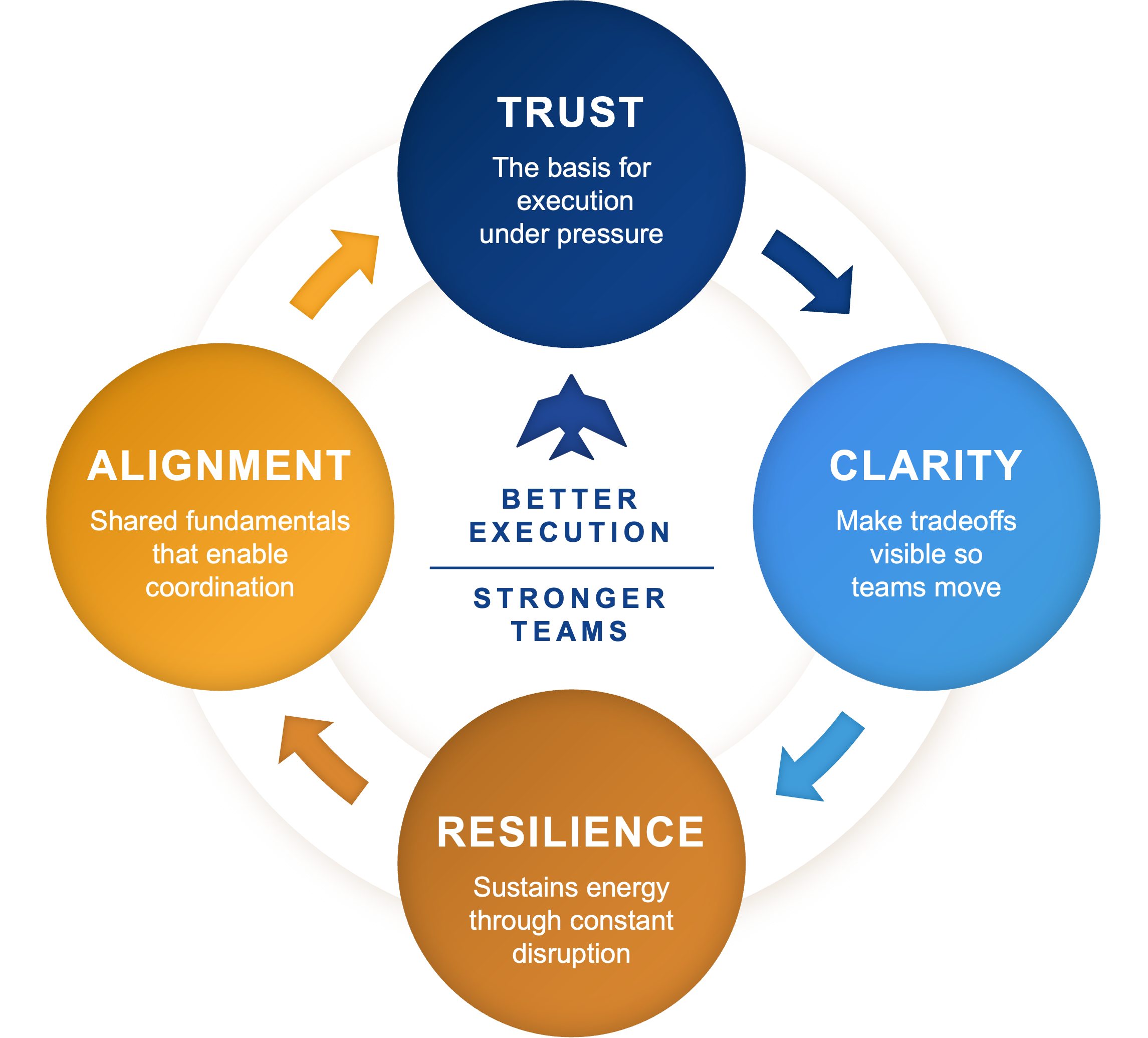
These capabilities compound. The stronger they get, the easier it becomes to execute strategy consistently, even when the waves keep coming.
How the Work Happens
Most teams don’t need more theory. They need a clear diagnosis, leadership alignment, and repeatable habits that hold up when conditions get messy again.
Diagnose. Align. Embed.
You can start at any step, depending on what your team needs right now.
1
Diagnose
Get a clear read on what is creating friction, fatigue, stalled execution, or drift.
This can include lightweight assessment, leader input, and facilitated discovery to identify the few leverage points that matter most.
2
Align
Build shared clarity on priorities, operating norms, and leadership behaviors.
This is where teams move from “we all see the problem” to “this is how we operate now.”
3
Embed
Turn insight into durable operating discipline.
Habits become real when teams practice them, reinforce them, and revisit them under pressure until the new operating system becomes the default.
The goal is simple: build execution capability that lasts, even as conditions keep changing.
Engagement Paths
Whether you need a catalytic reset, a skill-building experience, or a longer capability journey, these are the most common ways leaders engage my work.
-
Advisory and coaching helps leaders embed new operating habits so peak performance becomes sustainable. This work is designed to build durable operating discipline through reinforcement, real-time decision support, and ongoing leadership calibration.
Format: Monthly advisory, coaching, and capability support (virtual, with optional onsite touchpoints)
-
Offsites help leadership teams diagnose what is creating friction, sharpen priorities, and commit to shared ways of working. The outcome is a team that communicates cleanly, makes better decisions, and moves through complexity with less drag and more cohesion.
Format: Half-day or full-day facilitated offsite (typically onsite)
-
Workshops help leaders and teams build concrete skills and habits that improve execution: clarity, trust, resilience, and alignment. This is where insight turns into action, as participants practice tools together and leave with immediate next steps.
Format: 60–180 minute interactive workshop (onsite or virtual)
-
Keynotes create a shared language and a collective reset so leaders leave aligned on what it takes to execute strategy in perpetual change, with greater clarity, steadiness, and follow-through. Audiences walk away with practical ideas they can apply immediately.
Format: 30–75 minute keynote (onsite or virtual)
Take the 5-Minute Team Operating System Assessment
Most teams don’t need another big initiative. They need clarity about what’s getting in the way of execution.
This short assessment shows you where your team’s operating system is under strain, across four capabilities: clarity, trust, resilience, and alignment. In just a few minutes, you’ll get a clear read on what’s creating drag and where your team lands on a maturity model.
No prep required. Takes about 5 minutes.
What leaders say after the work
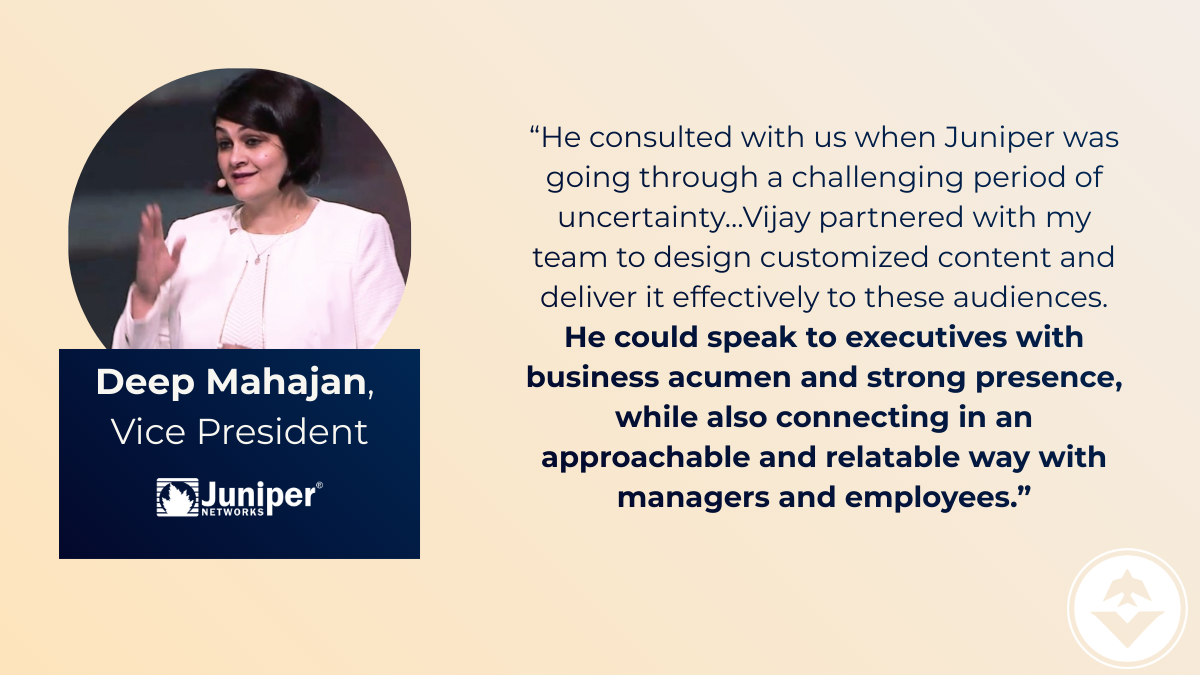
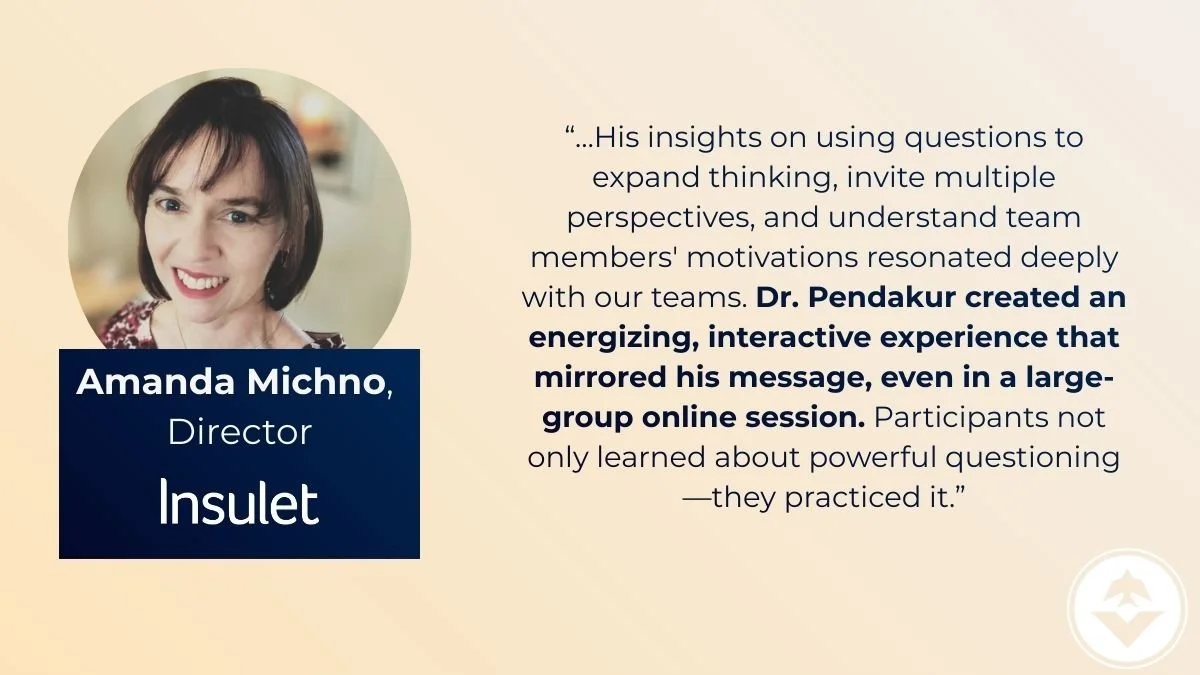
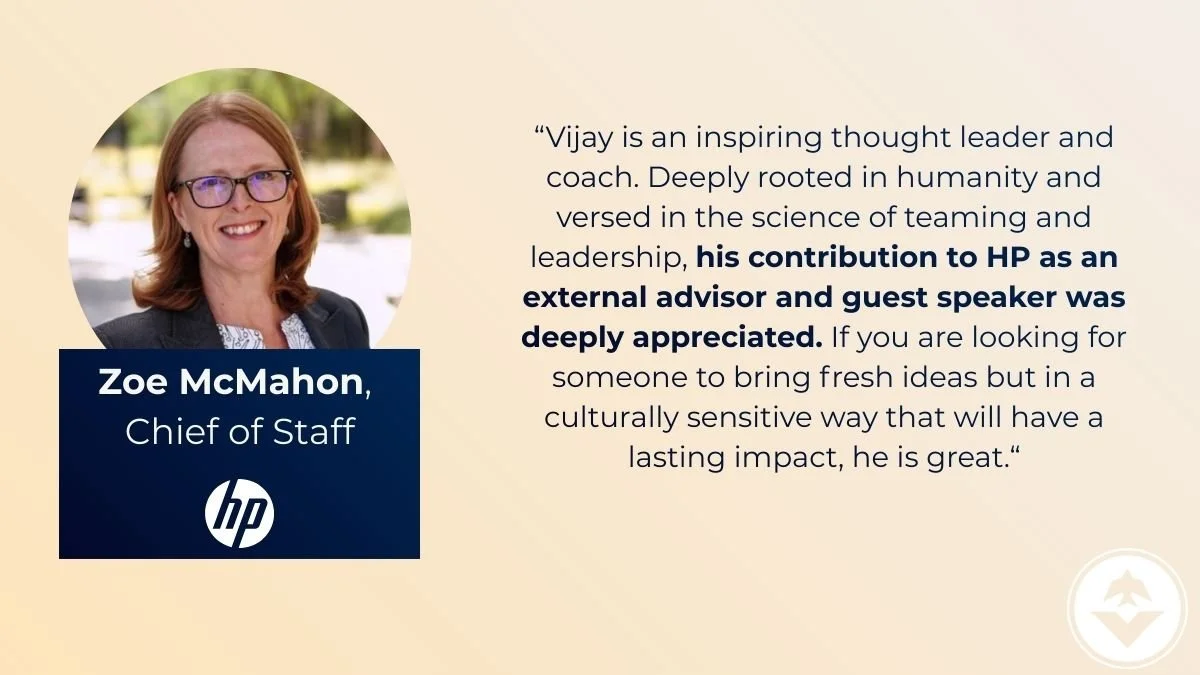
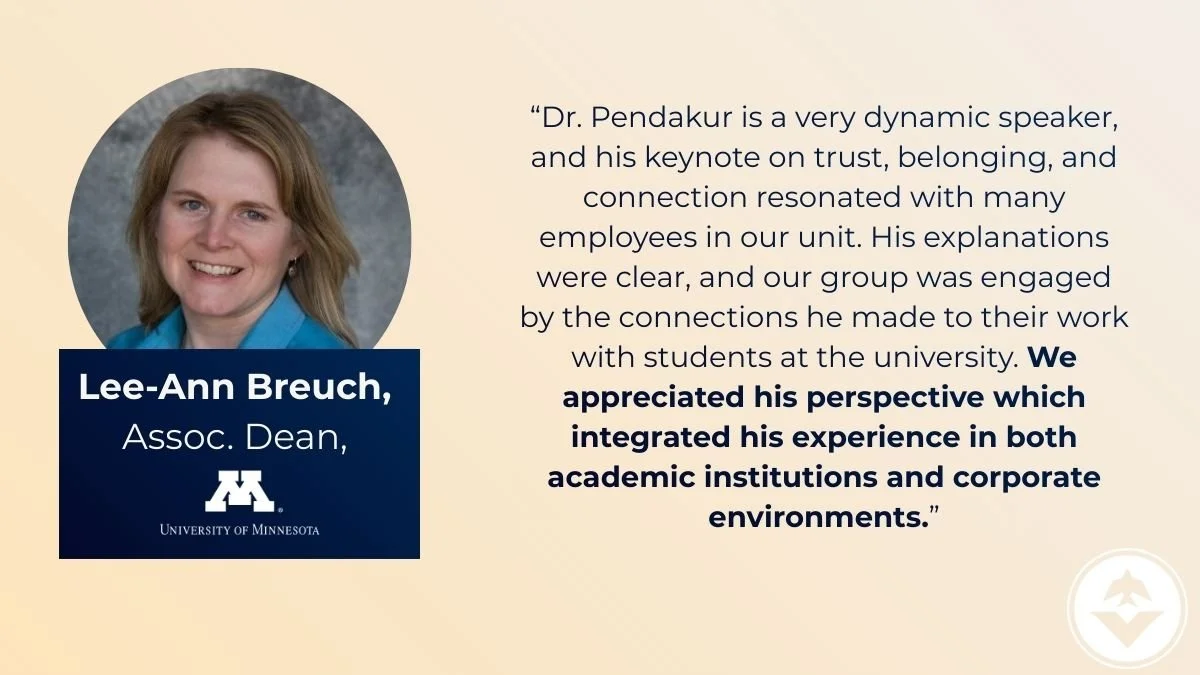
Leaders bring me in when execution is getting harder than it should be. Here’s what they experienced after we strengthened the team operating system.